Veteran business acquisition guide

SBA financing for
veteran business buyers.

You bring the leadership experience. Build the financing plan to buy an established company and lead its next chapter.

Pioneer Capital Advisory helps veteran buyers evaluate the business, structure the capital, and work through lender selection and closing.

Prepared by Pioneer Capital Advisory · Updated November 11, 2026

Can a veteran buy a business
with SBA financing?

Yes. Eligible veterans can use SBA 7(a) financing to acquire an existing business. For a qualifying initial acquisition, the minimum equity injection is generally 10% of total project costs. Under SBA Notice 5000-883564, qualifying limited equity sources can supply all of that contribution.

That creates a potential path to a $0 personal-cash injection when approved sources fully fund the requirement. The lender still evaluates the company, ownership structure, buyer experience, and liquidity.

SBA Notice 5000-883564, pages 1–2 ↗

Build your sources and uses

See what your acquisition
requires in equity.

Build the full project budget and compare the eligible-veteran and standard rules. Your minimum total injection and the amount still needed update as you type.

Acquisition equity calculator

Assumes the veteran ownership, documentation, and SBA loan-number timing requirements are met.

Your total uses of funds

Enter each cost once. Include assets already reflected in the purchase price only within that price. The lender determines which uses qualify.

Enter the combined amount of qualifying full-standby seller debt, other qualifying standby debt, and eligible non-controlling minority equity.

Minimum required equity injection$300,00010% of $3,000,000 in total project costs
Total project costs$3,000,000
Limited-source maximum · 100%$300,000
Limited-source capital counted$300,000
Remaining injection from other eligible sources$0
Other acquisition financingLimited sources countedRemaining injection
Other acquisition financing needed$2,700,000

Qualifying sources cover the minimum injection. Your personal cash contribution toward that injection could be $0. The lender will still review the cash available after closing for the business and your personal needs.

Start with total project costs.

A $2.5 million purchase, $250,000 of working capital, $150,000 of eligible costs, and $100,000 of additional assets form a $3 million project. At 10%, the minimum injection is $300,000. Count assets already included in the purchase price once. Have the lender reconcile any costs you have already paid.

Explore working capital in an acquisition →

Eligibility & permitted capital

What the November 2026
SBA change actually allows.

More flexibility in the source of your equity can help preserve personal savings while you take over the business.

Effective dateNovember 11, 2026
Qualifying SBA loan numberBy September 30, 2027
Veteran ownershipAt least 50%, in aggregate

Who qualifies?

The notice covers a 7(a) change of ownership in which one or more veterans will own and control the applicant business after the transaction. Veteran status is determined under Appendix 3 of SOP 50 10 8.1.

Direct and indirect ownership held by qualifying veterans is aggregated. At least 50% must be held in the applicant and, where applicable, the operating company immediately after the acquisition. A mixed veteran and non-veteran buyer group needs to satisfy that ownership-and-control test.

Which deadline matters?

The loan must receive an SBA loan number between November 11, 2026 and 11:59 p.m. Eastern on September 30, 2027. The lender reports each owner’s veteran status and identifies the type, provider, and amount of each injection source in its credit memorandum.

Ask the lender to review your ownership chart and service documentation early. An LOI date or a planned closing date alone does not establish eligibility within this window.

Three sources to structure carefully

Full-standby seller debt

The seller can defer a portion of the purchase price through a qualifying note. Principal and interest payments must be deferred for the entire 7(a) loan term. The notice also restricts a standby-debt provider from taking equity in the business.

In practice The seller receives less cash at closing. Separately fund the working capital the business needs to operate.

Other qualifying standby debt

The debt must be on full standby for the entire 7(a) loan term. The provider must comply with the restriction on taking an equity investment in the business.

In practice Align the funding documents, payment restrictions, and lender approval before including this source in the injection.

Non-controlling minority equity

Each qualifying investor must hold less than 20% of operating-business equity, exercise no control, and receive only tax distributions until the 7(a) loan is paid in full.

In practice Review voting rights, distribution expectations, and redemption terms before accepting a commitment.

Use the rule as a financing framework. Each source must satisfy the underlying SOP. The lender may require more equity or liquidity. A purchase price above the business valuation creates an additional equity-funding consideration.

Read the full SBA procedural notice ↗

Post-closing liquidity

A $0 personal down payment
still requires a cash plan.

The veteran equity flexibility can help preserve your savings. Banks still want a business with enough operating cash and an owner who can meet personal obligations after closing.

The equity injection answers how the acquisition is funded. Post-closing liquidity addresses what money will remain available once the transaction closes and the new owner takes over. A lender can accept qualifying outside sources for the full minimum injection and still require you to retain a specified amount of personal cash, fund additional business working capital, or strengthen the overall reserve position.

Cash inside the business

The company needs money for payroll, suppliers, rent, insurance, taxes, debt payments, and other operating expenses. A profitable business can face a cash shortage when expenses fall due before customers pay. Seasonality, inventory purchases, slow collections, and transition costs can increase that need.

Show which cash, receivables, inventory, and payables transfer under the purchase agreement. If the seller retains cash or receivables, reflect that in the opening budget. Explain how funded working capital and any approved credit facility support the actual payment schedule.

Cash retained by you

The lender also wants to understand how you will cover household expenses, personal debt payments, relocation, and other commitments. It will consider the compensation the business can support, reliable outside household income, and accessible reserves.

A buyer who must immediately draw more cash than the company can support creates additional pressure on the acquisition. Show a realistic personal budget alongside the business forecast, including the effect of leaving a job or changing your compensation.

How banks decide what is enough

Different lenders use different approaches. Some focus on a number of months of the buyer’s personal cash needs. Others assess business working capital and personal liquidity together. Some use a percentage of the loan amount as a starting point. These are lender-specific credit approaches. Confirm the actual requirement for your acquisition before committing to the final structure.

  • Timing of cash receipts and payments. When do customers pay, and when do payroll, suppliers, taxes, and loan payments fall due? The lender wants to see the low point in the cash forecast.
  • Room in the repayment model. Tighter debt-service coverage leaves less capacity to rebuild cash after a weak month. The owner’s compensation and necessary reinvestment belong in that model.
  • Business and transition risk. Seasonality, customer concentration, equipment needs, key-employee retention, and the seller’s handover can affect the reserve the bank wants.
  • Availability of the funds. The bank may review cash and marketable securities differently. Ownership, access restrictions, market volatility, existing pledges, and the conditions on any credit line matter.

Ask for the bank’s requirements in dollars. Confirm how much cash it expects in the company at closing, how much it expects you to retain personally, which assets it will accept, and when it will verify them. Identify each dollar once in your sources and uses, opening business balance sheet, and personal reserve schedule.

A worked example with no personal cash toward the injection

Assume an eligible veteran acquisition has the same $3 million project budget used in the calculator, including $250,000 of funded cash working capital. A qualifying $300,000 full-standby seller note satisfies the minimum injection, subject to lender approval. Separately, the buyer starts with $100,000 of personal liquid funds and pays $35,000 of personal relocation and household outlays before closing.

ItemIllustrative amount
Total acquisition project costs$3,000,000
Minimum injection covered by a qualifying seller note$300,000
Buyer’s personal cash toward that injection$0
Funded cash working capital available to the business$250,000
Buyer’s personal liquid funds before personal outlays$100,000
Personal outlays paid before closing($35,000)
Buyer’s personal cash remaining at closing$65,000

The bank must decide whether the company’s $250,000 and the buyer’s $65,000 are adequate for their respective needs. Keep the cash earmarked for payroll and other business obligations identified when discussing the overall reserve position.

The seller note reduces the cash paid to the seller at closing. The loan and other approved cash sources still have to fund the cash uses of the project. Document the amount that actually reaches the business’s operating account.

Amounts are illustrative. Your lender sets reserve requirements and makes the credit decision. The $35,000 represents personal expenses outside the acquisition project budget.

Bring the lender a post-closing cash schedule

Start with current bank and brokerage statements, a personal financial statement, a household budget, and an itemized schedule of cash leaving each account before and at closing. Reconcile that schedule to the settlement statement and the business’s opening balance sheet. Include the timing and conditions of any additional funding.

For the business, build a monthly cash forecast for the first year with clear assumptions for collections, payroll, supplier payments, owner compensation, taxes, and debt service. SBA’s acquisition guidance calls for analysis of working-capital adequacy over at least the next 12 months, along with review of the post-acquisition balance sheet and the owners’ ability to meet their obligations.

If the plan leaves insufficient reserves, work through the budget, funding sources, operating cash needs, and timing of outlays with the lender before closing. The financing plan should support both the acquisition and the period when you begin running the company.

SBA SOP 50 10 8.1, Appendix 15, C.2.b, lender’s credit analysis ↗

The buyer behind the numbers

Why banks value
military operating experience.

An acquisition loan depends on the business performing after its owner changes. Banks want to understand who will lead the people, make decisions, and protect cash flow.

Make your experience concrete.

Veterans can bring experience leading teams, coordinating complex work, maintaining readiness, and acting under pressure. The strongest financing presentation connects those responsibilities directly to the business being acquired.

In Pioneer’s 2026 lender conversations, banks asked for evidence of operator readiness, transferable experience, a clear day-to-day role, and a credible transition. One lender identified military service as a positive part of a buyer’s profile. Another wanted the buyer’s operating career and National Guard experience emphasized in the presentation.

Connect it to this company.

A bank can understand the relevance of managing field teams, equipment, schedules, and competing priorities. It will also ask how you will learn the industry, retain key employees, maintain customer relationships, and use financial reporting.

Show the scope of your responsibility with your actual team sizes, budgets, training duties, and outcomes. Then explain the work you will own after closing and the support you will use where you need additional expertise.

Your experienceThe lender’s questionWhat to put in the buyer profile
Leading and developing peopleCan this buyer retain, supervise, and develop the team?Actual team size, supervisory duties, training responsibilities, and a plan for key employees.
Planning operations and logisticsCan the buyer keep daily work running through the transition?Examples of coordinating people and equipment, a day-one organization chart, and a first-90-days plan.
Making decisions under pressureHow will this owner handle a customer issue, staffing gap, or cash constraint?A concrete decision, the information you used, the outcome, and the advisers or managers supporting you.
Building process and accountabilityHow will the owner identify problems and follow through?A reporting rhythm for cash, collections, service quality, safety, and team performance.
Applying relevant relationshipsDo the buyer’s connections support a credible commercial plan?Documented relationships and a practical plan separating existing revenue from potential new business.

From Pioneer’s lender conversations

The biography becomes useful when it explains the plan.

In one veteran-led acquisition, lenders asked how the buyer’s experience and relationships could support customer diversification, how new programs would coexist with existing contracts, and how the business would preserve its established customer base. The buyer prepared a written explanation connecting military experience and civilian operating work to specific commercial opportunities. The lender confirmed that it addressed the request.

The file also required answers about customer concentration, the seller’s transition, the buyer’s location, financial reporting, equity sources, and liquidity. That is the practical standard to prepare for. Present the leadership story and a documented plan for the business together.

This example is anonymized. Individual transactions and lender decisions vary.

Pioneer clients on Acquiring Minds

Veterans on the path
to business ownership.

Hear how Pioneer clients brought military leadership into their search, acquisition, and operating decisions.

Andrew Sova and Alex Clark featured on Acquiring Minds

Alex Clark & Andrew Sova

Alex served as a U.S. Army infantry officer.

They acquired Winsor Fireform, a specialty signage and public-art manufacturer. Alex describes bringing experience leading teams of roughly 40–100 people into clearer delegation and accountability, alongside the business skills he developed in consulting.

Listen for how complementary experience, working capital, and a thoughtful transition support the move into ownership.

The Ferrari of Signage ↗
George Tibil and Keith Fields featured on Acquiring Minds

Keith Fields & George Tibil

Keith served four years in the U.S. Marine Corps.

After buying ServiceMaster Clean in Buffalo, the partners spent months working overnight alongside cleaning crews. Their story shows the hands-on demands of transition and the work involved in building credibility with employees.

Listen for employee relationships, operational involvement, and the realities of taking responsibility for a team.

Turning Around a Blue Collar Business in Decline ↗
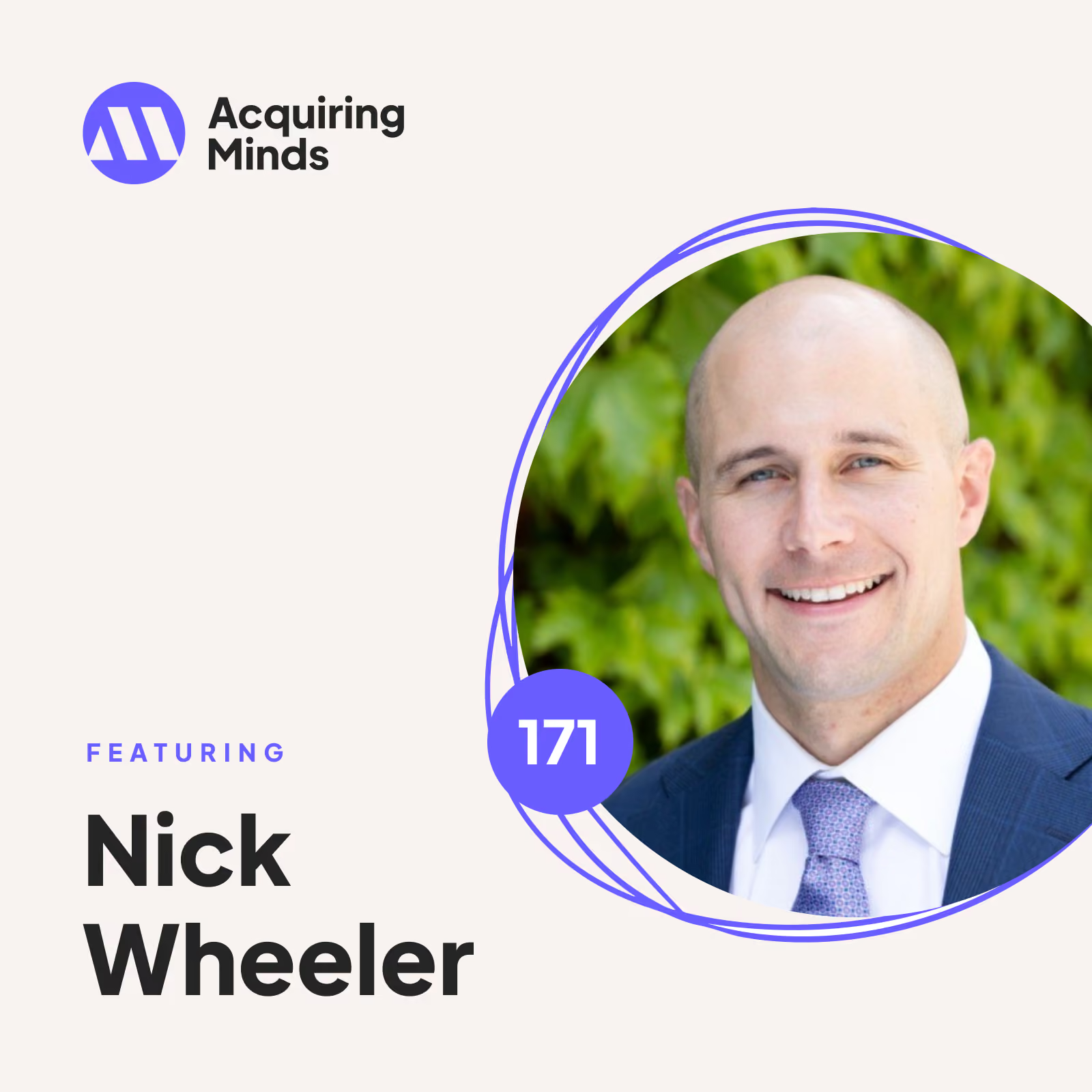
Nick Wheeler featured on Acquiring Minds

Nick Wheeler

West Point graduate and former Army Green Beret.

Nick shares the experience of pursuing a commercial landscaping acquisition that fell apart. The conversation covers diligence, seller alignment, and the time, money, and energy committed to a search.

Listen for how an experienced military leader evaluates an operationally intensive business and reflects on a difficult outcome.

Postmortem of a Broken Deal ↗

Pioneer sponsors Acquiring Minds, independently hosted by Will Smith. Alex Clark, Keith Fields, and Nick Wheeler are the veterans identified in these interviews. The episodes predate the November 2026 rule. Nick’s episode covers a transaction that fell apart. Episode accounts may cover several stages of a buyer’s journey.

Visit Pioneer’s complete Acquiring Minds collection ↗

Prepare for the financing conversation

Turn your experience into
a lender-ready buyer profile.

Your operator story

  • Translate your military responsibilities.Describe team size, budgets, equipment, training, logistics, and measurable outcomes in language a commercial lender can follow.
  • Define your day-to-day role.Explain where you will work, what responsibilities you will take over, and who makes decisions when you are away.
  • Build the transition around people.Identify key employees, technical or licensed roles, the seller’s handover responsibilities, and who owns important customer relationships.
  • Show how you will learn the financials.Outline your reporting cadence and the accounting support you will use to manage cash, payroll, receivables, and debt service.

Your financing package

  • One complete sources-and-uses schedule.Include the purchase, required operating cash, eligible transaction expenses, additional assets, and the source funding each use.
  • Support for the equity.Provide an ownership chart and proposed seller-note or investor terms. Expect the lender to verify where the funds come from and how they reach closing.
  • Business performance and debt capacity.Bring available tax returns, current financial statements, support for earnings adjustments, and a realistic debt-service model.
  • Veteran status and transaction timing.Ask the lender which service documents it needs and how it will confirm the qualifying ownership and SBA loan-number deadline.

Start this work before fixing the LOI’s financing assumptions. A seller may agree to deferred proceeds while expecting earlier payments than full standby permits. An investor may expect distributions that conflict with the minority-equity rules. Resolve the proposed economics early.

Working with Pioneer

Bring the buyer, the business,
and the financing together.

We help you turn an acquisition into a lender-ready financing request and coordinate the process through closing.

Structure the acquisition

Review the full project budget, ownership plan, equity sources, and operating background. Work through seller-note and investor terms before they become financing obstacles.

Build the lender case

Present the company’s financial performance, the buyer’s qualifications, and a credible transition plan. Match the request with lenders whose criteria fit the business and transaction.

Carry it through closing

Coordinate lender questions, financial updates, equity verification, and closing requirements alongside your legal and accounting advisers.

On SBA engagements, Pioneer’s advisory fee is paid by the lender at closing. Your engagement agreement sets out the terms. Bank fees, diligence, legal work, and other transaction expenses belong in the acquisition budget.

Frequently asked questions

Veteran acquisition financing,
answered directly.

How much equity does a veteran need to buy a business with an SBA loan?

For an initial acquisition, the minimum injection is generally 10% of total project costs. Under the November 2026 notice, an eligible veteran acquisition may fund all of that amount with qualifying limited equity sources. The lender may require more equity, and a purchase price above the business valuation creates a further equity-funding consideration.

Can my personal cash contribution toward the injection be $0?

It can be possible when approved sources satisfy the full minimum injection and the transaction meets the notice’s requirements. Banks will still review the business’s operating cash and your personal cash remaining after closing. Budget for costs paid before closing, relocation, household obligations, and the reserve amount your lender requires. Review the post-closing liquidity section above when building your cash plan.

What belongs in total project costs?

Start with the business purchase price and add the approved uses needed to complete the acquisition and fund its initial operating needs. Depending on the deal, these can include working capital, eligible transaction and financing costs, additional inventory or equipment, and real estate. Count each use once and reconcile amounts already paid. The lender determines the final eligible project-cost base.

Can a seller note cover the entire required injection?

For an eligible veteran acquisition, qualifying seller debt can be included within the sources covering up to 100% of the required injection. It must be on full standby, with principal and interest payments deferred for the entire 7(a) loan term, and comply with the applicable documentation requirements. Confirm the proposed terms with the lender and transaction counsel.

Can investors fund the required injection?

The notice permits qualifying non-controlling minority equity investments. Each such investor must own less than 20% of the operating-business equity, exercise no control, and receive only tax distributions until the 7(a) loan is paid in full. Review voting rights, distribution rights, redemption features, and the complete ownership structure before relying on an investment.

How does the 50% veteran ownership threshold work?

The notice aggregates direct and indirect interests held by one or more qualifying veterans. At least 50% ownership must be held after the transaction in the applicant and, where applicable, the operating company. Have the lender review the full ownership chain and the ownership-and-control requirements.

Does a mixed veteran and non-veteran buyer group qualify?

The notice allows veteran ownership to be measured collectively. A mixed group needs a structure that meets the veteran ownership and control criteria after closing, together with all other program requirements. The calculator’s veteran setting assumes that review has been completed.

Which date controls the temporary flexibility?

The notice uses the date the loan receives its SBA loan number. The stated window begins November 11, 2026 and ends at 11:59 p.m. Eastern on September 30, 2027. Have your lender confirm how your application fits that window.

Will military leadership experience be enough for a lender?

Lenders also evaluate the target company’s performance, debt service, management needs, industry risks, equity sources, and liquidity. Translate your service into concrete operating capabilities and address gaps through key employees, seller support, professional advisers, and relevant civilian experience.

Can I keep my current job and hire a manager?

Describe your proposed involvement and management arrangement to the lender early. The lender will assess your responsibilities, availability, experience, and the structure’s eligibility. A clear plan should show who manages daily operations, supervises staff, handles customer issues, and takes responsibility for performance.

Do I need a signed LOI before talking with Pioneer?

A pre-LOI conversation can help you understand a target’s financing needs and the implications of proposed seller or investor terms. If you already have an LOI, bring the purchase structure, available financials, ownership plan, and expected closing timeline.

Do banks still require cash after closing if I contribute $0 toward the down payment?

Yes, expect the lender to require adequate post-closing liquidity even when qualifying outside sources cover your full equity injection. The bank will evaluate cash available for the company’s operations and the buyer’s personal obligations. It may require personal reserves, additional business working capital, or both, based on its credit review.

How much post-closing liquidity will my lender require?

Ask the lender to state the required amount and the assets it will accept for your transaction. Lenders may assess months of personal expenses, the combined business and personal reserve position, or a percentage of loan size. The business’s cash cycle, debt-service coverage, operating risks, buyer compensation, and household obligations influence that decision. Your lender sets the required cash reserve for your transaction.

Your next step

Build a financing plan
for the business you want to lead.

Bring the business you are considering, your operating background, and an initial picture of your capital. We’ll help you identify the financing questions to resolve.

You can also reach our team at deals@pioneercap.com.

Sources & review

Grounded in the notice.
Informed by lender work.

This guide combines the SBA’s implementing notice with Pioneer’s acquisition-financing experience. The rule summary is current as of November 11, 2026. The calculator provides an illustration for an initial acquisition and the final financing structure requires lender review.

Prepared by Pioneer Capital Advisory. Client episodes are linked to the original Acquiring Minds interviews. Lender observations are anonymized.